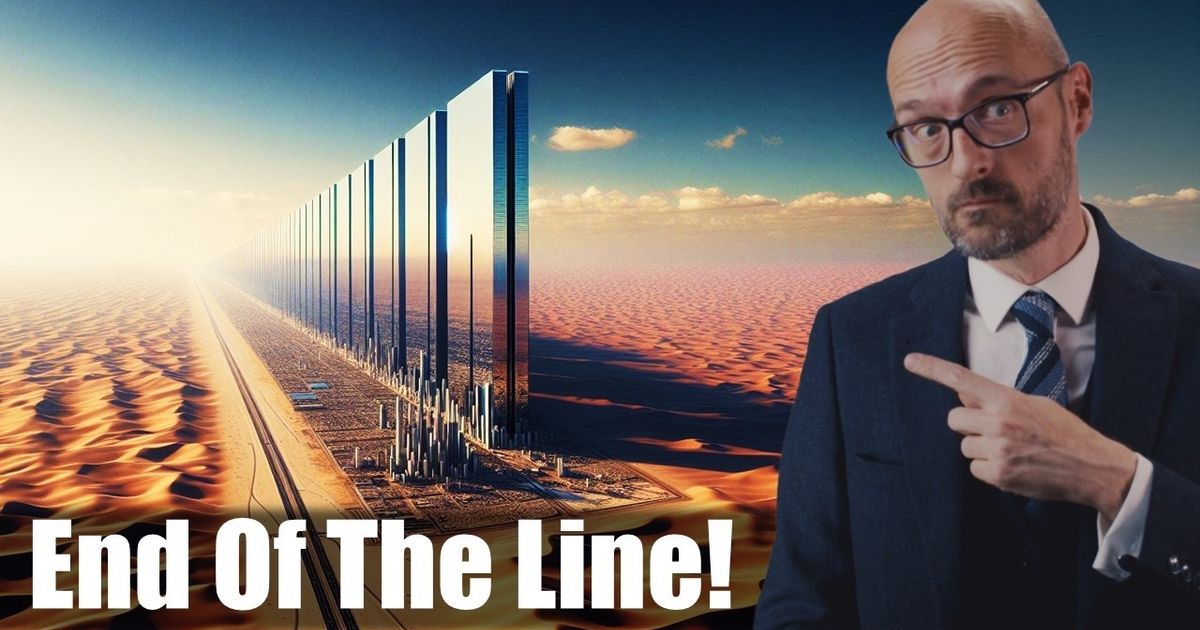
The Ambitious Vision of Neom's Linear City
Saudi Arabia's Neom project, particularly its most ambitious component known as 'The Line', was initially conceived as a revolutionary urban development. This linear city was envisioned to stretch 170 kilometers across the desert, with towering mirrored walls reaching 500 meters in height. The plan was to house 9 million residents by 2030, creating a futuristic urban environment that would redefine city living. However, recent developments have seen these grandiose plans significantly scaled back.
According to Bloomberg, the Saudi government has decided to curtail its medium-term ambitions for Neom. The original vision for 'The Line' has been reduced to a mere 2.4 kilometers in length, a drastic reduction from its initial scope. This decision reflects a shift in the project's feasibility and the challenges of implementing such an unprecedented urban concept.

Key Details and Developments
The scaling back of 'The Line' is not just a matter of physical dimensions but also of population targets. Initially, the Saudi government aimed for 'The Line' to accommodate 9 million residents by 2030. However, this target has now been adjusted to fewer than 300,000 residents. This significant reduction raises questions about the project's viability and the factors that led to such a dramatic change in plans.
One of the critical issues facing the Neom project is the lack of an approved budget for 2024. Bloomberg sources indicate that the Saudi government has yet to finalize financial allocations for the project, which has likely contributed to the scaling back of its ambitions. Without a clear financial roadmap, the realization of such a massive urban development becomes increasingly challenging.
Background and Context
Neom is part of Saudi Arabia's Vision 2030, an initiative aimed at diversifying the country's economy away from oil dependency. The project was announced in 2017 by Crown Prince Mohammed bin Salman as a cornerstone of this vision. The idea was to create a high-tech hub that would attract global talent and investment, positioning Saudi Arabia as a leader in innovation and sustainable development.
'The Line' was to be a centerpiece of Neom, offering a unique urban living experience with zero cars, zero streets, and zero carbon emissions. The city was designed to be powered entirely by renewable energy, with advanced technologies integrated into every aspect of daily life. However, the ambitious nature of the project has faced skepticism from various quarters, with critics questioning its practicality and environmental impact.
Analysis of the Curtailment
The decision to scale back 'The Line' reflects a broader trend of reevaluating megaprojects in light of financial, logistical, and environmental challenges. Building a 170-kilometer linear city in the desert is an unprecedented undertaking, and the complexities involved in such a project cannot be underestimated. The need for sustainable water sources, energy supply, and infrastructure are significant hurdles that have likely influenced the decision to reduce the project's scope.
Moreover, the global economic climate and shifting priorities may have played a role in the reassessment of Neom's ambitions. As countries worldwide grapple with economic uncertainties, large-scale investments in experimental urban developments may be deemed less feasible. The reduced scale of 'The Line' could also reflect a strategic pivot towards more achievable goals within the broader Neom project.
Why It Matters
The curtailment of 'The Line' has implications that extend beyond Saudi Arabia's borders. It highlights the challenges of implementing visionary projects that push the boundaries of urban development. While the concept of a linear city is intriguing, its practicality in terms of cost, sustainability, and livability remains uncertain. This development serves as a cautionary tale for other nations and developers considering similar ambitious projects.
Furthermore, the scaling back of 'The Line' underscores the importance of adaptability and realism in urban planning. As the world faces increasing environmental and economic pressures, projects that prioritize sustainability and practicality over grandeur are likely to be more successful. This shift in focus could lead to more innovative solutions that address the challenges of urbanization in a rapidly changing world.
Future Outlook
Despite the reduction in scale, Neom remains a significant undertaking with the potential to transform Saudi Arabia's economic landscape. The project's focus may shift towards more achievable components, such as developing sustainable energy solutions and fostering technological innovation. These elements could still position Neom as a leader in sustainable urban development, albeit on a more realistic scale.
As Saudi Arabia continues to pursue its Vision 2030 goals, the lessons learned from 'The Line' could inform future projects and strategies. By prioritizing feasibility and sustainability, the kingdom can still achieve its objectives of economic diversification and global leadership in innovation. The future of Neom, while different from its initial vision, holds promise for redefining urban living in the 21st century.
Closing Thoughts
The rise and fall of Neom's linear city ambitions offer valuable insights into the complexities of modern urban development. While the initial vision for 'The Line' may have been curtailed, the project's evolution reflects a necessary adaptation to the realities of implementing such a bold concept. As the world continues to grapple with the challenges of urbanization and sustainability, the lessons from Neom will undoubtedly influence future projects and strategies in the realm of urban planning.
This article was created with AI Blog Builder